
#43: Nature Made
Plants, foundational models, and the search for new medicines.

The bet on foundational models
I’ve previously written about tech-bio—the technologies making it faster, better, and more efficient to discover pharmaceuticals and get them to market. Think clinical trial recruitment, organs-on-a-chip, robotic labs, and novel endpoints. There are startups across all of these categories, but the overwhelming share of new “tech-bio” companies I hear about today are building some form of AI for drug discovery.
It feels like a new foundational model company announces fresh funding every week. This week, it was Chai Discovery. Last month, Profluent. In 2025 alone, Anthrogen, Latent Labs, Synthesize Bio, Isomorphic Labs, and the Arc Institute all raised money and/or launched new models—some designed to simulate molecular interactions in 3D space, others to directly design novel molecules and proteins.
As of writing, no drug that was solely discovered and designed by AI has received regulatory approval and reached the market. But we are close.
Short of the commercialization of an AI-designed drug, it’s hard to measure success in this domain. Foundational models undoubtedly give scientists more shots on goal, but accurately modeling a drug interaction in silico doesn’t guarantee clinical success.
At this point I should admit poor writing on my part because this isn’t actually a piece about AI drug discovery, as you might suspect—just the opposite. I have no doubt AI drug discovery will lead to multiple successful shots on goal, but I do think there’s a risk of neglecting to look elsewhere for new medicines. Breakthrough science can come from anywhere—even from accidents—so we shouldn’t limit ourselves to foundational models alone, because they are by definition trained on what we already know and understand.
Plants as medicine
The idea of looking elsewhere for new drug candidates made me think of a class I took in undergrad called Food, Health, and Society. In practice, it could’ve easily been called Plants, Health, and Society. The course explored everything from the history of ancient civilizations through the lens of plants and spices, to how plants communicate with one another and defend themselves using chemical and electrical signals.
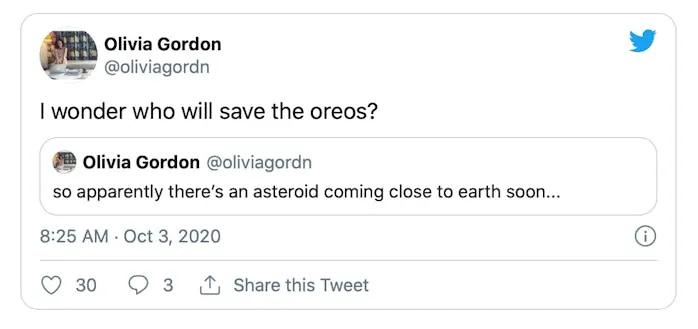
Fun fact: There is a seed vault in Svalbard, Norway, which serves as the backup to global crop diversity. Oreo created their own vault in 2020 for a funny marketing campaign, sparked by this tweet:
The class was taught by ethnobotanist Cassandra Quave, a professor at Emory University who studies how people have used—and can still use—plants as medicine. Her lab has identified multiple plant-derived compounds with therapeutic potential, including two that inhibit the COVID-19 SARS-CoV-2 virus.
Quave’s work is extremely important and offers a source of inspiration for drug design: plants have been running their own chemical and biological experiments for the last 500 million years. The compounds that plants make are not random. They are produced for defense and communication, but have been adapted for medicine.
Today, more than 120 commonly used drugs contain plant-derived compounds. Aspirin comes from willow bark. Morphine from poppy. Caffeine from coffee beans and tea leaves. Modern medicine did not invent drug discovery so much as it systematized and industrialized it.
Removing the factory label
Plants have an endless list of health-promoting attributes—they purify air, improve mental health, boost productivity, and make human life possible in the most literal sense.
“There is no version of human flourishing that’s disconnected from plants.”
And yet, much of the modern agriculture and bio narrative treats plants as factories. Technologies in this space overwhelmingly optimize for output: genetic engineering, fertilizers, smart irrigation, and resilience-maximizing traits. These approaches matter, but they frame plants as scalable infrastructure rather than the intelligent systems they are.
Seeding new drug discovery
I’m not arguing that we need fewer foundational models. I’m arguing that we need broader foundations that take into account new learnings from ecology, evolution, and plant defense mechanisms alongside modern computation. Such a broader foundation should include non-lab-generated intelligence directly from plants.
In that spirit, here are some of the companies tapping nature as a starting point for drug discovery:
Brightseed: Using AI to identify biologically active small molecules in plants and microbes.
Enveda Biosciences: Accelerating the discovery of novel drug candidates from the natural world through metabolomics and ML.
Hexagon Bio: Unlocking cancer therapeutics by sequencing plants and microbial genomes.
An honorable mention goes to Fauna Bio, which isn’t plant-focused but applies a similar philosophy—translates evolutionary adaptations from hibernating mammals into novel drug targets.
Models like Evo 2 and AlphaFold 3 are changing how pharmas and biotechs find their next drug candidates. They are racing to simulate biological and chemical intelligence, but it’s worth remembering that much of that intelligence already exists—rooted and growing in plants.
The next life-saving drug may be recognized in plants rather than designed by computers.